Showing posts with label photography. Show all posts

Wednesday, April 2, 2008

388 - Interview: Erin Tyner

1. Tell us about yourself and your background
My name is Erin Tyner and I live in Atlanta, Georgia with my husband Chris and our Italian Greyhound named Finn. My background and education is in the social sciences (social work, psychology, criminology). I started taking photos in early 2007 when I got my first camera.

2. What is your work about? What is your process?
My goal with my photos is to tell a story or express an emotion - whether that's through a created scene, a still life or a found object. Sometimes my photos are very spontaneous such as when I'm exploring abandoned places and don't want to stick around long! (Check out the Better Since You Left gallery on my website) When photographing still life or miniatures I just try to make the image match what I see in my head.

3. From where does your inspiration come?
Favorite music and literature, Minimalism, abstract and Surrealist artists, Nature, dioramas, taxidermy, dreams

4. Outside of photography, what are your interests?
I'm a movie junkie, watching multiple movies on the weekend is a guilty pleasure. I always have music playing and love concerts. I'm pretty decent in the kitchen and experiment with new recipes weekly. Of course I like eating (most of) those experiments too! I also enjoy exploring places in and out of town with my husband.

............................................................


Tuesday, June 19, 2007

364 - with Links!

Who Needs Law School?

1. Who Needs Law School?
Remember about a month ago when I told you about a guy that had his camcorder stolen so he posted the suspected thief's phone number in a youtube video? Remember I suggested that what he did was probably illegal? Yeah. Well, I was right.

Speaking of Youtube

2. Speaking of Youtube
Somebody leaked some footage from the new Micheal Bay Transformers movie onto the internet. There's no audio, but seeing the transformations from robots to cars is pretty freaking impressive.

Nodes

3. Nodes
Another way to waste time at work when you are supposed to be making money for the capitalist pigs.

Speaking of Capatalist Pigs

4. Speaking of Capatalist Pigs
These capitalists are about to be really, really pissed.

Google Street Fight

5. Google Street Fight
Have you been following the Google Streetview privacy rights issue? In case you don't know, Streetview is a new feature of Google Maps which allows you to zoom in through Google's satellite imagery, to see actual street level photographs of certain metropolitan areas, including pedestrians doing things they might not want posted on the internet. Not only street fights, but also crimes in progress, streetside hanky panky, smoking up, getting a ticket, and other things.

............................................................


Sunday, June 3, 2007

348 - Pinholes

Pinhole

1. Pinhole
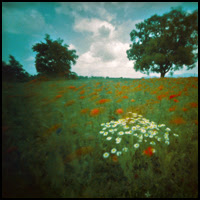
I've been thinking a lot about pinhole photography lately and came across this incredible photographer on flickr, Imre Becsi, who uses a modified flower pot to make work which reminds me of the paintings of Andrew Wyeth

Instamatic My Ass

2. Instamatic My Ass
I'm trying to modify a point and shoot camera so that I can have the convenience of using 35mm film and one hour processing. So far my results haven't been perfect. It is really really hard to make pinhole in aluminum only .19mm in diameter. Figuring out exposure times is a real chore as well.

Quaker

3. Quaker
In case you don't know, a pinhole camera is a simple image recording device without a lens. Pinhole photographs usually have infinite depth of field and extremely wide angle views. Recent tradition presumes that pinhole cameras should be made in cardboard boxes or oatmeal containers to produce pictures on large format negatives or sheets of photo paper.

Resources

4. Resources
If you can get the oatmeal box to work, you might want to move on, experimenting with different containers, learning which hole diameters work best with which focal lengths, and figuring out the concept of reciprocity. Speaking of which, if anyone knows of a good reciprocity chart for different film types and extra long exposures, I'd love to know about it.

Woodr

5. Wood
Eventually you might build a pretty extravagant camera. Or you could just buy one of these awesome teak box cameras from Zero Image. I'd take the Zero 135.

............................................................


Friday, May 4, 2007

318 - Colorized

Blindness

1. Blindness
See if you can follow what is going on in this card trick video. Don't worry, the secrets are revealed at the end.

Whatsits

2. Whatsits
Upload a photograph and find out its average color as well as ten complimentary colors. This is a very useful tool for building a design based around any image, especially nice for website construction.

Color - Match

3. Color - Match
Photoshop has so much awesome stuff going on that it must be impossible for anyone to know about all of it. I wish I knew about this color match tool a long time ago. It basically forces one photograph to use the color palette of another. James Delaney of Unfocused Brain uses it to make his digital photos look like classical paintings.

Red Team

4. Red Team
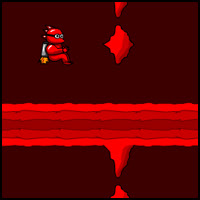
Use both hands to control two different characters. This game is difficult enough, but add in the violent red color scheme and it makes it hard to look at as well. I gave up after level four.

Separation

5. Separation
The first commercially available color films, Kodachrome and Exakta, were developed in the 1930s. However, French and Russian photographers were experimenting with color as early as 1872 with startling results.

............................................................


Tuesday, March 27, 2007

280 - Timothy O'Sullivan

Wahington Crossing the Delaware

1. Wahington Crossing the Delaware
Prior to the invention of photography, and then the American Civil War, images of warfare were usually allegorical representations of the glory of battle. Emanuel Leutze's famous painting of Washington had very little in common with actual events during the Revolutionary War. Occasionally, artists used their work, to to glorify war, but to condemn it. For instance Goya's Execution of the Rebels, and Picasso's Guernica. But again, these paintings are more about composition and style than depicting reality.

Mathew Brady

2. Mathew Brady
Timothy O'Sullivan began his career as an apprentice to Mathew Brady. Brady was a world class portrait photographer raised in the art community and especially influenced by the artist William Page, Brady yearned to create great art, but photography had not yet attained a level of respect in the art world. Brady himself felt photography was inferior to the classical arts. In order to justify the importance of his work, Brady aspired to record history as it happened. He photographed all of the greatest leaders of the time.

Bull Run

3. Bull Run
Then the war broke out. In 1861 Brady assembled a group of assistants, including O'Sullivan, to travel with him to the battle of Bull Run in order to photograph a more extreme case of history in the making. The experience was harrowing for Brady and he never went out into the field again. He was, however, dedicated to capturing images of the war. Brady assigned traveling darkrooms to a selection of his assistants and sent them out into the field with the military, while he stayed in New York and continued making portraits.

Photojournalism

4. Photojournalism
Of Brady's assistants, Timothy O'Sullivan, along with Alexander Gardner, was the most successful. O'Sullivan had slightly different aspirations than his employer. While Brady wanted his work to be artistically important, O'Sullivan was arguably the very first photojournalist. He captured events exactly as the appeared in front of him with little or no interpretation. He never attempted to manipulate the viewer using the traditional tools of the artist. His compositions are almost always straightforward, and he never altered the scene to make it more appealing than it was in reality.

The Moved Body

5. The Moved Body
O'Sullivan's colleagues, on the other hand, were not above viewer manipulation. Most notoriously, the famous works of Alexander Gardner, A Sharpshooter's Last Sleep and Home of a Rebel Sharpshooter are suspected of major alteration. The rifle seen in the photos was not Confederate regulation and is thought to have been a prop included by Gardner. The bodies seen in the photos are also in question. Researcher's claim that both photographs depict the same dead soldier. This implies that Gardner actually moved and posed the body into position for multiple shots

............................................................